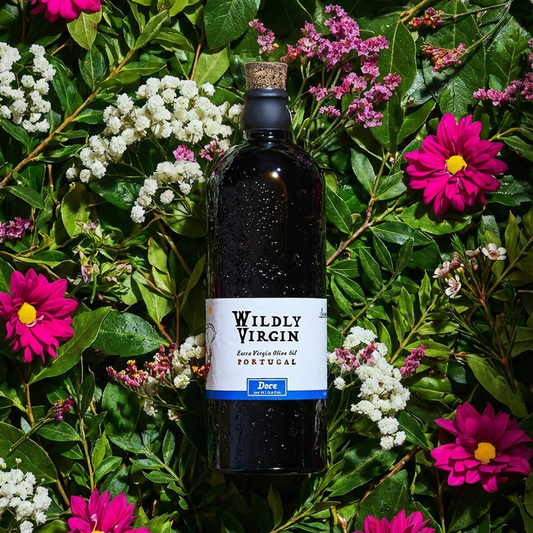
When we set out to find the finest Galega olive oil in the Alentejo, one name kept surfacing. Ask any local producer, any miller, any neighbor who makes the best, and the answer, again and again, was Bernardo Marchante. The quiet engineer who came home to run his family's hilltop groves near Sousel, in the Alto Alentejo.
Bernardo's story begins four generations before him, when his great-great-grandfather João Augusto, a country doctor with humble roots, cleared enormous boulders from the land and planted the olive trees that still stand today. The estate sits at nearly 500 meters of altitude, its groves stretching across a ridgeline with sweeping views in every direction: the Serra de São Mamede to the north, Évora Monte to the south, and an endless canvas of Alentejo plains in between. It's the kind of vantage point that reminds you how big this landscape is, and how deep the roots run.

Bernardo studied electrical engineering before returning to the family's land, and his technical mind shows. He uses computer vision to monitor the flock of nearly 900 sheep and goats that graze freely among the olive rows, clearing brush and fertilizing the soil naturally, a closed-loop system the family has refined across five generations. The estate has been certified organic since 2000, and Bernardo's commitment to Galega, one of Portugal's oldest and most traditional olive varietals, is as much about preservation as production. As growers across the country replace Galega with higher-yielding cultivars, Bernardo has doubled down, believing this naturally sweet, fruit-forward varietal is a flavor worth protecting.